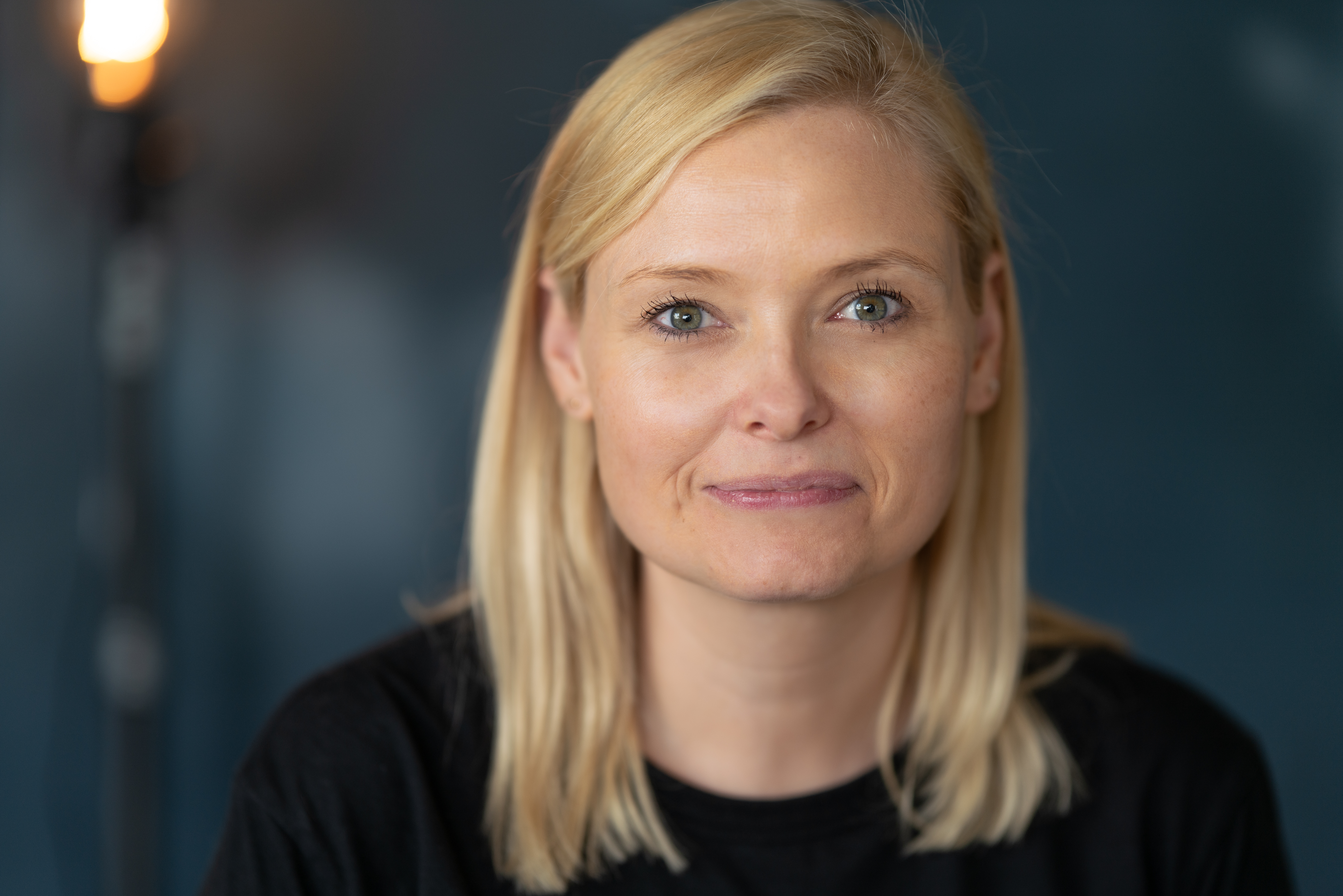
What pulled you into film and TV in the first place?
In 2005, I made the drive across the US from NYC to LA following the abrupt end of my first dream, Broadway musicals, which pretty much began and ended on September 11, 2001. I’ve been a natural storyteller and Creative all my life. The medium changed, but the passion for storytelling never has. I couldn’t have known that shift from stage to set would bring me so much joy and feel like “Home.” It’s the type of chaos, collaboration, and problem-solving I crave.
What do you think the industry gets most wrong about women like you?
It’s challenging to answer what I believe the industry gets most wrong about women like me because I’ve never quite fit into a box. I suppose the honest answer is that my greatest challenges never came from the work itself, but in the gatekeepers, those in between talent and decision-makers. I’ve also had bad timing: getting established just days before the writers strike in 2007, then rebuilding and reinventing myself in time for the pandemic and our recent strikes. The industry has shifted yet again.
What does success mean to you?
Success to me is the ability to thrive doing what I’m most passionate about, reaching toward my ultimate potential (do we ever really get there?), and hopefully reaching back to inspire others to do the same. Our stories need to be told. I have a lot more in me!
What are you most proud of that most people don’t know about?
I am deeply proud of my ability to learn, adapt and thrive despite countless obstacles and events beyond my control. But what I am secretly proud of are all of the fellow creatives I’ve been able to elevate and get employed over the last 20+ years.
What keeps you going when the industry makes it hard?
What has always kept me going remains an insatiable creative appetite. I’ve been both blessed with and cultivated a wide range of skills applicable to the Arts and Entertainment industries. But Creativity isn’t something I’ve been able to “turn off.” I’m constantly downloading new ideas and wanting to breathe them to life.
What is one piece of advice you wish you had heard earlier?
I entered Hollywood with no connections, and no clue about “The Biz.” In retrospect, I would have fared far better having a mentor. Someone to help me fine-tune focus and avoid some of the pitfalls of the industry. Especially where it came to navigating patriarchy.
Anything else you’d like to share?
I have many projects in various stages of development. two film scripts (one, I’m penning into a novel, the other could be a phenomenal series), my autobiographical blog, my podcast (GATMPodcast), my fashion designs, and my photography (I’m a self-taught automotive/street art photographer)… I think I’m over “creating my own projects,” lol. I’m hoping to connect with fellow filmmakers/writers/storytellers to finish and elevate these efforts and conceive new ones, together!
What pulled you into film and TV in the first place?
The interest to tell stories.
What do you think the industry gets most wrong about women like you?
They feel we are superficial, unintelligent etc.
What does success mean to you?
I think my definition of success has changed as I’ve gotten older. When I was younger, I thought success meant reaching the peak of my career being widely known, having a thriving business, and getting to that point where I could say, “Yes, I’ve made it.”
But as I’ve grown, I’ve realized there really isn’t a final destination called success. There will always be another goal, another level you want to reach, or another thing you want to learn and accomplish.
So today, I see success more as growth and fulfillment. It’s being able to look at where I am and know that I’m moving forward, building a life and career that I’m proud of, while still having the freedom to set new goals and evolve. For me, success is not necessarily arriving at a particular point; it’s knowing that I’m becoming the person I want to be and that the things I’m building have meaning to me.
What are you most proud of that most people don’t know about?
I think what I’m most proud of is my ability to keep going, even when things haven’t happened as quickly as I imagined they would.
There have been so many points where I could have decided that maybe it’s time to give up on certain dreams, especially when you’re putting in the work and you don’t immediately see the results. But I’ve continued to reinvent myself, learn, try again and find different ways to move forward.
I don’t think people always see that side of me. They see the things I post, the business, the acting, the books and everything else, but they don’t necessarily see all the uncertainty and the moments behind the scenes where I’ve had to encourage myself to keep going.
So, honestly, I’m proud that I’ve never completely abandoned the person I want to become.
What keeps you going when the industry makes it hard?
To be very honest is the love of the craft. Cause omg!
What is one piece of advice you wish you had heard earlier?
I had the advice but I didn’t listen. Don’t go into acting.
Anything else you’d like to share?
You can find Jane on Instagram at @sleekjane and on YouTube at Janeslife, where she has some movies, including DIS-GRUNTLEMENT, Part Time Uncle, and Don’t Let Girls Go Alone. She also has a sitcom coming out soon, so watch out for that one. She’s open to telling more stories, so reach out to her.
“Stop waiting for permission or to feel good enough. The encouragement you seek will not arrive, so build it within yourself. Find other women and communities that lift each other up.”
What pulled you into film and TV in the first place?
I always loved films and would watch a movie over and over again as a child, a habit that I continued throughout my life. I wrote out entire screenplays (of the movies I was watching) in school when we were supposed to write in our journal. I filmed and photographed people constantly as I grew up. Humanity, their stories and the way in which a point of view can tell those stories through film has always captured my attention. I didn’t know that I could be a director and so I became an actor. The first four directors I worked with were women with a strong vision. I worked with Mary Harron on American Psycho who was calm, brilliant, inspired by everything I did, and laser focused on what she was doing. She also had a newborn baby on her hip at the age of 49. I was performing opposite huge stars, but they didn’t intimidate me. It was Mary Harron who I most admired that day. I wanted Mary Harron’s job one day. I just had a day player role, but when I was leaving after my 14 hour day, Mary Harron ran after me to thank me. What a class act. I shadowed a female director I had worked with as an actor at the National Film Board of Canada after that, but it would still take me another twelve years before I directed anything.
What do you think the industry gets most wrong about women like you?
I think a big misconception is that if a woman is calm and confident, but not loud and overbearingly confident, then she can’t do the job of a director. But if she’s too confident then she’s “bizarre” or “who does she think she is?!” It’s a fine balance to evoke the right flavor of confidence when a man doesn’t even have to have a body of work, like a woman does, and is still taken seriously. I’m not entirely sure what they think, but I can see that people respect my work and women like me, but I can also see that that doesn’t matter if no one is going to support it. The industry can determine that a woman is a talented filmmaker, yet that still doesn’t translate to actual public support, distribution or getting hired again. I think the industry thinks it’s supporting women because we talk about it now, but talk isn’t enough. A female director still faces the same systemic barriers as twenty years ago, but now the industry acts like they don’t while it pats itself on the back for noticing.
What does success mean to you?
Success to me is being able to keep making art with other great artists and working in the arts for a living.
What are you most proud of that most people don’t know about?
I’m most proud of myself for continuing to pursue my dreams despite adversity. I left home when I was 15 and didn’t have any emotional or financial support or guidance. I was truly alone and had injuries, surgeries and health challenges throughout my twenties, but still moved to the USA by myself to pursue my dreams. It was really difficult and I often felt like forces were working against me. Despite everything, I have managed to make the films that I wanted to make and I have continued to work in the arts with great artists, which makes me feel lucky and incredibly proud of myself for all that I’ve accomplished.
What keeps you going when the industry makes it hard?
There are a few answers to this. First, I wouldn’t know what else to do. I’m in too deep and I can’t turn back now. I also believe in my bones that when I’m directing I know what I’m doing. I feel in my power when I’m on set and I’ve accumulated a lot of knowledge from all of my experience, and that allows me to say with confidence that I know what I’m doing. I don’t feel that way in other areas of my life.
What is one piece of advice you wish you had heard earlier?
Stop waiting for permission or to feel good enough. The encouragement you seek will not arrive, so build it within yourself. Find other women and communities that lift each other up.
I am a director-actor-intimacy coordinator and acting teacher in Los Angeles. I began working as an intimacy coordinator in 2024 after years of training, which I love and which combines all of my accumulated knowledge and interests. I love collaborating – it’s what I love most about working in film. I love working with all the HOD’s and how we all come together to create dynamic storytelling, bringing something special to life. I’m currently writing a feature film to direct and act in and always looking for intimacy coordinating opportunities and acting work (my first love).
What pulled you into film and TV in the first place?
Ever since I was a kid, I have always been passionate about storytelling. I grew up loving films, acting, and creating stories, but as I got older, I realized how rarely authentic stories and accurate representation are shown onscreen and stage especially as a Deaf person. Often times our stories are told inaccurate in a harmful ways or even hearing Actors playing a Deaf character which robs our opportunities, our story, and our voice. Instead of waiting for ableist system to finally come around to give me opportunities or for someone to decide whether I was “worthy” of playing a role simply because I am Deaf, I decided to create my own opportunities. My stories matters. My life experience matters. My voice matters. That is why I created and founded Annabelle Louise Productions.
I have been in the industry for over 35 years and have written three tv series, and four feature films and am still working hard to get them all greenlit. My goal is not only to tell compelling, authentic stories, but also to create opportunities for people who have historically been underrepresented both in front of and behind the camera. There is so much talent, creativity, passion, and capability within underrepresented communities. The problem is not a lack of talent. The problem is a system that too often refuses to see it, invest in it, or provide equal opportunities.
As a Deaf artist, I know firsthand what it means to navigate audism — the oppression, discrimination and rejection that Deaf people experience because they are Deaf. I have spend years navigating those barriers, but refuse to let them define what I can create. I’m not waiting for someone else to open the door. I’m building my own door and hoping it open for others. Authentic representation matters. Inclusion matters. Accessibility matters. And our stories deserve to be told by the people who have lived them. I create because I believe we are capable. We are talented, We all have stories to tell.
What do you think the industry gets most wrong about women like you?
You don’t know me until you meet me. I strongly believe that both the entertainment industry and society have often perceived me as “dumb,” “incapable,” or “less worthy” simply because I am Deaf — and because I am a woman. Where do these perception come from? They can begin with what the society is taught to believe about people who are different. They can come from medical professionals, parents, teachers, families, friends, employers, and institutions that unknowingly or knowingly reinforce assumptions about what a Deaf person can or cannot do.
But let me be clear I’m Deaf not Dumb. I’m Deaf not Lazy. I’m Deaf not incapable. My accomplishments speak for themselves. I hold an AA Degree in Theatre, a BS in Corporate Communication, a MS in Education, as well we certification and professional training in Films/TV, the Business of Entertainment, Intimacy Coordination/Direction and Mental Health Coordination. I am an actor, filmmaker, screenwriter, director, producer, creative professional. And have produced 4 shorts, and three of them are award-winning films, and still continue to working hard to greenlit my features and shorts.
And yet, despite my education, experience, skills, and decades of dedication to the entertainment industry, I still struggle to even get an interview for employment. Sometimes the barrier isn’t my qualification. The barrier is whether someone ever takes the time to see me beyond a label. Human resources system, Studios, Producers can filter people before they have the opportunity to speak for themselves. Automated hiring systems, email screening and AI-driven screening can reinforce barriers when resumes doesn’t fit a predetermined formula. And when assumptions about Deafness are already present, the door can close before I even have a chance to walk through it. That is incredibly frustrating.
Because time and time again, I have discovered something: People are often wrong about me until they meet me. Once we actually sit down, communicate, exchange ideas and have a conversation, suddenly they discover that I am capable, educated, creative, passionated, talented, experienced, determined and full of ideas. So instead of judging me from a resume, checkbox, assumption, or an algorithm, I invite you to meet me. Let’s grab a coffee and chat. Let’s talk about storytelling, representation, accessibility, business, creating and opportunities. You might discover that the person you thought you knew from a label is nothing like the person sitting across from you.
I’m not asking for sympathy. I’m asking for opportunity. I’m asking you to look beyond the assumptions. Because when you give people the opportunity to be seen, heard and valued for what they can actually contribute, everyone wins. So If you believe in authentic representation, inclusion, accessibility, and creating meaningful change — and yes, let’s grab the coffee and chat!
What does success mean to you?
What success mean to me, as success can mean so many different things in life. For me, a true success is much bigger than money, awards, credits or recognition. True success is when all human beings, including the Deaf and Disabled people are seen and treated equally. It is a world where accessibility exists everywhere without us constantly having to advocate, educate, explain, fight, or battle system that were never designed with us in mind. It is a world where Deaf and Disabled people have genuine opportunities in life and in their careers not because someone feels sorry for us but because our talent, skills, creativity, and humanity are recognized. It is a world where inclusion is real. Where accessibility is expected. Where safety matters. Where we don’t have to fight just to belong. That would be a huge success.
Honestly, sometimes I wonder if I will ever see that world in my lifetime. Deaf and Disabled people have been fighting against discrimination and oppression for generation which the fight feels endless. But I still have hope. I hope through my authentic story telling, I can reach people. I hope my stories can make someone think differently. I hope they can be reminded people that behind label is a human being with dreams, feelings, talent, experience, and a story worth hearing. Maybe I cannot change the entire world. But if I can change one person’s perspective, open one door, create one opportunity, then my work matters.
And right now, my personal definition of success is very specific. I want to see Bell’s Darkness greenlit. I’m actively seeking funding, partnership, and in-kind support to bring this powerful, authentic feature film to life. But this film means far more to me than simply making a movie. It is connected to a promise I made to my beloved Annabelle Louise Schaefer, the CEO of Annabelle Louise Productions, who has passed away. I am keeping that promise. I have carried this dream through years of oppression, rejection, discrimination, audism, and countless moments when society and the industry made me question whether there was a place or someone like me. I’m still here, still moving forward and the day will come when Bell’s Darkness has its red-carpet premiere. And when I stand there looking at the screen, surrounded by the people who helped make it possible, I know exactly what I will say. I will cry, and say “Annabelle, we did it” and it will be a proof that rejection does not have to be the end of the story. Sometimes, you have to become the person who creates the opportunity you were never given.
What keeps you going when the industry makes it hard?
A promise, a love, a legacy. It is my promise to my beloved late Annabelle Louise Schaefer, carried forward with the love we shared. Annabelle believed in me, in my dreams, and in the stories I wanted to tell. Her love became part of the foundation upon which I continue to create. She may no longer be here on this earthly presence but her love remains with me — in my heart, in my work, and in every step I take.
What is one piece of advice you wish you had heard earlier?
I don’t have any advice that I wish I had heard, but am navigating this alone with the love that Annabelle has given me.
Anything else you’d like to share?
I’m always looking for dedicated passionate collaborators to come together to bring stories to life as well as roles to portray, as I’m a human just like you all as I do not want to be limited due to the assumptions of me. Anything is possible once we all open our mind, eyes and heart. Contact me, and let’s get creative as well as to make a difference together!
What pulled you into film and TV in the first place?
Growing up our family source of entertainment were comedy shows, Vicar of Dibley, Fawlty Towers, Dad’s Army, not your classic tv shows for a seven-year-old but I just loved them all. They always made me feel really comforted and safe, and when I thought about writing, I just loved the idea of writing someone’s new favourite comfort show. The show they put on when they feel sad and know instantly it will cheer them up. And that’s always the pull when I’m writing, how will this ultimately make someone feel? Will this make a person’s world better by seeing it?
What do you think the industry gets most wrong about women like you?
I think the industry makes the mistake of thinking that women like me aren’t ready for the next step. They don’t understand that women like me are relentless, not in an aggressive way, but in an I’m-here-and-I’m-going-to-keep-knocking-at-this-door-until-you-let-me-in way. We can multitask, we can do the part-time job, the childcare, and still dedicate the time to write, take a course, create something by ourselves, and we can do it with little support too. We’re scrappy, and we won’t stop until we decide to.
What does success mean to you?
Success for me isn’t about money or fame, it’s about being able to spend time working on my craft, sharing ideas in a writer’s room, and being able to create something that people enjoy.
What are you most proud of that most people don’t know about?
I got my first BBC writing credit (and pay cheque) on a topical comedy show this year, and due to work demands and childcare, I did my submission within a 2-hour window rather than the standard 24-hour window that’s given for open submissions. I was absolutely thrilled and really proud of myself for not giving up and not missing the deadline.
What keeps you going when the industry makes it hard?
Watching my favourite comedy shows or nerding out on how they got made listening to podcasts or reading the writer’s books. It reminds me of what I’m working towards and also, obviously, make me laugh. And having a network of supportive creatives around me is essential too, people who remind me I’m capable of doing this!
What is one piece of advice you wish you had heard earlier?
I caught an Instagram clip of Brett Goldstein when he was asked what advice he’d give his younger self, he said ‘Do the thing, just get on with it. You’re going to do it anyway so anytime you aren’t doing it is just wasting time.’ It really resonated with me – I’d always wanted to write and I’d always wanted to act – so I should probably just get on with it. And accepting you won’t be perfect when you start something – in fact you might even be bad. But it’s OK because you just started. That piece of advice has set me up for any kind of rejection now because ultimately we are always still learning.
Anything else you’d like to share?
I’d love people to find me on Instagram @chrissie_homer or email me at chrissiejayneh@hotmail.co.uk and I’d love to start building a network of fellow female writers, so please get in touch!
“Get a partner who can say the hard things you can’t. Sometimes it would’ve been nice to have a lioness alongside me to help strengthen my soft words.”
What pulled you into film and TV in the first place?
I have always loved stories that people can see themselves in. My background was in writing music and books, but two years ago, a script fell out of me. Literally. I was driving when an idea came to me. I had to pull the car over, cancel my plans and voice record all of it at once. I was inspired to write it after a vandalism to my husband’s restaurant because when something happens that I wish I could’ve handled differently, a story emerges. This film is basically my wish for how it could’ve gone.
I put it up as a staged reading and afterward, our Director approached, wanting to direct if it ever became a film. The same day an investor appeared as if by magic.
So, why am I in film? Magic.
What do you think the industry gets most wrong about women like you?
In my opinion themes that speak to women can often be obvious or dramatized when it’s the little things, the subtle things that we might not even notice in our lives that make it difficult to truly feel seen or heard. In my film, this is a big theme: the feeling the need to apologize for oneself, even subtly. Getting out of the way, smiling at strangers, etc. I love films that highlight these daily life aspects that might seem small but add up so quickly.
I have personally found that the industry favors the big things and they also might not take me seriously because I am new, full of hope and optimism and that somehow reads as weak or in need of lots of help. It’s been nice to produce my first feature (along with writing, acting and a million other things) to prove to some of them that, I’ve got this. Me, and an amazing team of course.
What does success mean to you?
Action. To me, the outcome doesn’t matter but holding an idea that never sees the light of day is failure. Acting on it, in any way possible, is success.
What are you most proud of that most people don’t know about?
The most proud moment I’ve had on this production was at the wrap party when a few very experienced crew members told me, this was the most organized set with the best food options ever. Out of all the things, making sure we had good food (our story is set in a café after all!) was priority!
What keeps you going when the industry makes it hard?
Trust. The way everything has happened in my life, film or otherwise, has had a flow. The minute I feel that I’m pushing the river I know I need to pivot. I have to trust wherever ideas come from, the people who believe in them enough to back them and me, and the process.
Actor & Producer, Founder of Eldub Films — eldubfilms.com
What pulled you into film and TV in the first place?
I wanted to act ever since my mum took me to see a production of Scrooge at the Oxford Apollo when I was about 4 years old. I then was an actor until about 2018/2019 when I decided I wanted to pivot towards producing. I saw a gap in the industry for women both behind and in front of the camera and I wanted to tell female focused stories and show a side of society that isn’t normally explored onscreen. I wanted to tell the stories I wanted to see and wanted to have a bit more control over what was created and what I worked on. Alongside acting I had worked as a celebrity assistant and so I had a lot of transferable skills. Producing lets me bring together talented creatives and help turn ideas into something that can genuinely connect with an audience. During the pandemic I did a Masters at Raindance in producing, set up my own production company Eldub Films and the rest is history.
What do you think the industry gets most wrong about women like you?
That life is over at 30 and that there are no interesting stories to be told about women later in life. There is more to us than falling in love and menopause.
What does success mean to you?
Success to me would be making the projects that I have chosen to make and am proud of. Being recognised for this and being a respected voice in the industry. Being able to help other women in the industry move forward.
What are you most proud of that most people don’t know about?
That despite everything I’ve been through in my life, I’ve never given up. I have looked after myself for a very long time even when it’s felt impossible.
What keeps you going when the industry makes it hard?
My belief that my turn is coming. People want to hear the stories I’m telling and I will get my chance eventually. It has to be someone, why shouldn’t it be me. Plus the incredible other women I meet in the industry and the incredible stories they have and their support.
Anything else you’d like to share?
You can find out more about her work at eldubfilms.com or lizzieworsdell.com. She’s always looking for female voices and collaborators with a story to tell.