Category: Review

  • Review: “Toy Story 4”

    MV5BMTYzMDM4NzkxOV5BMl5BanBnXkFtZTgwNzM1Mzg2NzM@._V1_

    by Merritt Mecham

    Toy Story is a franchise that has grown up with its audience. While Toy Story 4 is still a children’s movie, it’s hard for me, a 20-something reviewer, to view it as such. My older brother and I wore out the VHS tape of the original and Andy went off to college when I did. It seemed like a fitting end to the franchise. But life goes on after college, and, apparently, so does Toy Story

    Toy Story 4 finds Woody living with his new kid, Bonnie, yet again becoming obsolete. He’s no longer the toys’ leader. He’s left in the closet rather than played with. Desperate to make himself useful, he takes it upon himself to protect Bonnie’s new favorite “toy,” an unnatural spork and pipe-cleaner creation named Forky who, upon gaining sentience, has one aim: to get into the trash where he rightfully belongs. As Woody chases Forky, trying to prevent his pseudo-suicidal desire to get into the trash, and reunites with the now-swashbuckling Bo Peep, he has to confront his lifelong belief that all toys belong with children. 

    Like it did when I watched Andy go to college, watching Woody go through an existential crisis feels timely. Through Forky, the film dips its toes into the existential nature of mental illness and meme culture; Forky’s cry of “I’m trash!” echoes internet slang, and his flippant attitude toward the toys’ concept of death– getting thrown away– is distinctly millenial and Gen Z. But perhaps the more interesting narrative lies in Woody finally realizing he’s no longer relevant. The cowboy is more antique than beloved plaything, and finds himself reckoning with his position in the world, which brings out the worst in him. Woody doesn’t listen to others, he’s selfish and self-centered, and has a streak of self-important exceptionalism that blinds him to the needs of his friends. 

    Is it a coincidence that the friends this most affects are women? Probably not. Early in the film, Woody struggles to let Dolly be the leader in Bonnie’s room, and interrupts Jessie and the other female toys. As the film progresses, it doesn’t question whether or not Woody is obsolete in his current role– he is! Instead, it questions whether or not he can step aside and let women take the lead. Can Woody, the older generation, learn to see things in a new way? Effectively, can men and baby boomers step aside to make room for a new, more diverse generation? This might not be the story we need, especially seeing as it’s still centered on Woody, but it does feel like an honest one. It’s a child’s film that’s thematically aimed at the parents and grandparents in the room. 

    Toy Story 4 feels more disjointed than its predecessors, and those looking for the ultra-tight, ultra-polished feel of the first two films will likely find this one a bit lacking. 4 is touching base on so many characters and ideas that at times it feels as floundering as its main character. But its heart is in the right place, and as with all Pixar films the strides made in animation are stunning, from the noir-lit aisles of the antique store to the brilliant texture of the rain. It’s worth seeing in a dark theatre with bright projection. And then there’s all of the details that make Toy Story what it is: the colorful cast of instantly-memorable side characters, incredible voice talents, and the rapid-fire jokes and references. This sequel is guaranteed to surprise you and provide some belly-laughs along the way. 

    My friends will confirm that I love all of the Toy Story films. Despite my sequel fatigue, I’m sad to let them go. But as fond as I am of these stories, it’s time to grow up– and that goes not just for me, but for the Woodys everywhere. Let’s make room for everyone in the sandbox. 

    About Merritt Mecham

    Hello! My name is Merritt, and I’m a writer based in Salt Lake City, UT.

    I have work experience in radio, film, and education. These days you can find me working in the Film & Media Arts Department at the University of Utah.

    I’m also available for freelance writing. Read my work.

    I’d love to work with you! Check out my resume.

  • Review: “Us” by Merritt Mecham

    Review: “Us” by Merritt Mecham

    by Merritt Mecham

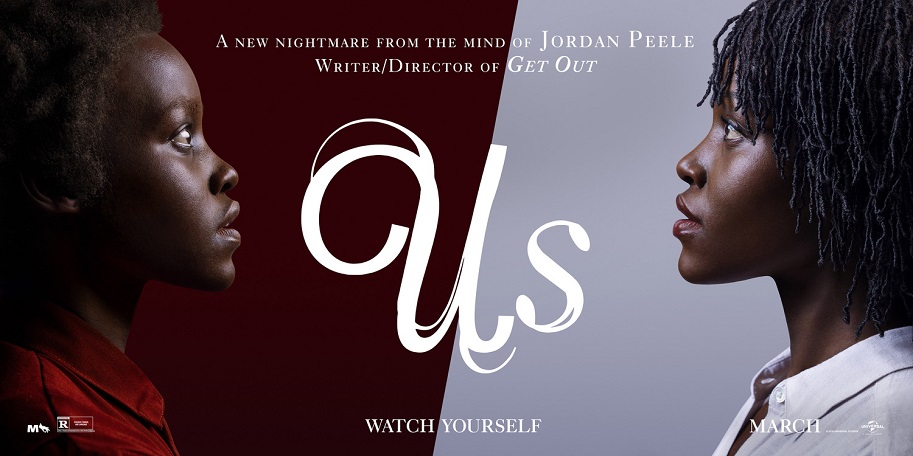
    Jordan Peele is one for details. As Us progresses you may realize that sandals have never seemed so menacing, that rabbits definitely don’t have souls, and that we were all blind to how creepy the words “hands across America” are. It’s this specificity that produces the most unnerving elements of Peele’s sophomore film and makes it all the more zany, hilarious, and chilling.

    While on vacation with her family in Santa Cruz, Adelaide (Lupita Nyong’o) relives a traumatic event from her childhood involving an encounter with a doppelgänger. Her haunted memories gradually escalate until she literally comes face to face with them when her evil twin and an entire evil duplicate family show up in her driveway, clad in red coveralls and tan sandals, bearing golden scissors.

    What happens from that point is best left to be discovered in a dark movie theatre with popcorn on hand to stress-eat, but the wild journey Adelaide and her family go through is likely more expansive and bizarre than you would expect. Peele’s film makes sweeping observations about America and suppression, privilege and revenge, while never losing sight of that old horror adage: the real monsters are human.

    Comparisons to Get Out are inevitable, but Us fits into an entirely different subgenre of horror. At times the violence is slasher to the point of slapstick, featuring splattered blood and acrobatics and makeshift weapons. References to Michael Jackson’s “Thriller,” Jaws, and video games make it clear that violence is so entrenched in American culture that it could never be the film’s consummate terror. As the title promises, killing the imposters isn’t as important as coming to terms with what they represent. It’s also a comedic film, with familiar family dynamics and some truly inspired needle drops keeping the film funny even through dark moments.

    Peele’s visual language is unflinching and patient, straying far from the gray palette and quick-cutting that’s currently popular. The cinematography alludes to some Spielbergian techniques (such as long reaction shots) but ultimately establishes its own style, using centered framing, slow dollys, wide shots, and bird’s eye view to great effect in revealing the unexpected. It’s refreshing to see so much of the characters between cuts, which showcases Lupita Nyong’o’s incredible, for-the-ages performance.

    At times the film gets caught up in its own logistics and ideas, and those looking for symbolism and analogies will likely find an over-abundance, many of which lead to dead ends. But taken at face value, the details and hyper-specificity in its design enhance the film’s nightmarish effect, like a dream where random inclusions feel significant even though you’re not sure why.

    One of the last sequences in the film features a stunning montage that cross-cuts a beautiful dance with a terrifying showdown, marrying beauty and horror. Similarly, whether or not the film’s ideas (and ending) land for you, Us is undeniably gripping in its dance between defining and defying the idea of “us” versus “them.”


    About Merritt Mecham

    Hello! My name is Merritt, and I’m a writer based in Salt Lake City, UT.

    I have work experience in radio, film, and education. These days you can find me working in the Film & Media Arts Department at the University of Utah.

    I’m also available for freelance writing. Read my work.

    I’d love to work with you! Check out my resume.

  • “Shrill” and the Power in Fucking Up

    “Shrill” and the Power in Fucking Up

    by Merritt Mecham

    Spoilers for the first season of “Shrill” below.

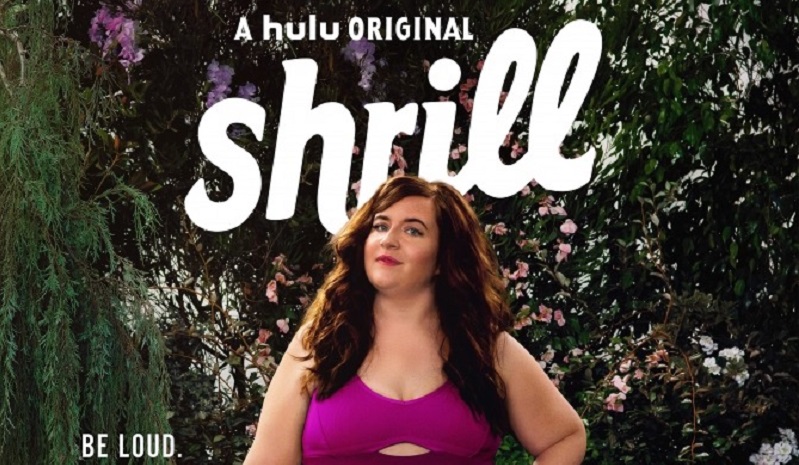
    Since it was released last week, Shrill has been lauded for everything from its costuming to its celebration of body diversity. It is revolutionary to see a simple, joyous depiction of fat women succeeding, having sex, and jumping into swimming pools. The show refuses to apologize for showing fat women as they are.

    Shrill is not unique in showing fat women as beautiful and deserving of love. That’s been done before by Isn’t it Romantic and Hairspray and a number of body-positive marketing campaigns. However, that depiction has skewed toward cisgendered women who possess white skin, conventional proportions, and able bodies. In fact, most representations of fat women simply allow for another rigid recipe for women to conform to. Despite the banner of inclusivity, the current capitalistic iteration of body positivity still requires fat women to be conventionally attractive, submissive, feminine, amiable, and, most importantly, apologetic about their size. In other words, they must be otherwise perfect to compensate for the perceived flaw of fatness.

    At the beginning of Shrill, Aidy Bryant’s Annie has internalized this idea. In addition to compulsive “I’m sorry!”s punctuating her every sentence, Annie’s choices show that she is more eager to make others comfortable than herself. She eats “thin menu” food which her friend Fran (Lolly Adefope) says “looks like a stillborn puppy.” She wears dark, loose clothes. She’s overly forgiving to her sort-of-boyfriend Ryan (Luka Jones), who treats her terribly. She looks past her boss Gabe’s (John Cameron Mitchell) fatphobic and dismissive comments.

    No moment in the show expresses this belief as poignantly as Annie’s pregnancy in episode one— the result of Ryan’s preference to “raw dog.” He asserts this habit and Annie can’t quite bring herself to refuse. “It’s just he liked me, and I didn’t want him to stop liking me… so I just went with it,” she says. Of course, this means Annie must deal with the consequences of Ryan’s thoughtlessness. As she decides to get an abortion, she briefly wonders if she should continue the pregnancy. While talking to Fran, Annie confesses her heartbreaking reality:

    “There have been moments in my life where I like didn’t think I would ever get to have [a husband and children]… because of what I looked like or because there’s a certain way your body is supposed to be and I’m not that, and that maybe if I was just sweet enough and nice enough and easy going enough with any guy that that would be enough for someone.”

    This idea that she must be “sweet enough and nice enough and easy going enough” permeates through Annie’s life— evidence of her belief that she must sacrifice herself in order to compensate for her fatness.

    This changes when Annie gets an abortion. Instead of people-pleasing perfectionism, Annie does something for herself. “I got myself into this huge fucking mess, but I made a decision, only for me, myself, and I got myself out of it,” she says. “I feel very fucking powerful right now.” Her experience serves as the impetus to stop apologizing for existing and start pushing back.

    But pushing back is inevitably messy. And this is where Shrill feels most revolutionary: it not only shows fat women who learn to celebrate their beauty— it shows fat women making mistakes.

    And boy, does Annie make some mistakes. She continues to forgive Ryan despite his immaturity and bad behavior. She posts on her work website without editorial permission, and then quits her job (though, given Gabe’s fatphobia and rudeness, that’s not really a mistake). She takes speaking her mind too far, consequently hurting her parents and sending her mom into emotional turmoil. She stands up her friend Amadi (Ian Owens) and bulldozes him in conversation. She pushes Fran so far that their friendship splinters, and Fran starts ignoring Annie’s calls.

    By the end of episode 6, Annie has alienated so many people in her life that she’s left alone. And alone she decides to confront the troll who’s been commenting on her articles. Having gotten the troll’s home address, she walks to his house and rings his doorbell. “I’m a real fucking person,” she says.

    It could be disheartening to watch someone make so many mistakes, but Shrill never loses sight of the fact that there’s power in the ability to fuck up. “I got myself into this huge fucking mess, but I made a decision, only for me, myself, and I got myself out of it.” Annie says in episode one, and that statement could be the show’s thesis. Annie realizes how much effort she’s put into making up for her fatness. “I’ve wasted so much time and energy and for what? I’m fat! I’m fucking fat,” she says in the climactic speech she gives in episode 4. Shrill trumpets the fact that fat women have the right to be independent and to make mistakes, just like everyone else. Annie’s done trying to make other people comfortable, and so starts living for herself.

    Leaving the troll’s house, Annie picks up a planter and throws it at his car, breaking the window. She runs away, coming directly toward the camera, demanding attention, relishing her transgression, and wearing an expression of unadulterated glee.


    About Merritt Mecham

    Hello! My name is Merritt, and I’m a writer based in Salt Lake City, UT.

    I have work experience in radio, film, and education. These days you can find me working in the Film & Media Arts Department at the University of Utah.

    I’m also available for freelance writing. Read my work.

    I’d love to work with you! Check out my resume.

  • Mango Meter App

    Check out the app “Mango Meter”! We’re really enjoying it.
     
  • Review – “The Handmaiden” by Chan-wook Park (2016)

    THEHANDMAIDEN_GRID.jpg

    “The Handmaiden” is a story of 4 people. Two men and two women. It starts off pretty typical with the Japanese and British cultures focus on patriarchy. Lady Hideko is left with a fortune but has no right to it because she’s a woman. So she lives with her uncle who intends to marry her one day to take the fortune but is beat out by Count Fujiwara who gets to the dowry before he does through a scheming plan that involves an innocent (or not) peasant, Sook-Hee. And yet, a third of the way through the movie, the audience learns that everything is not as it seems and that there is a whole different plan happening the audience doesn’t even know about, one that includes deep love and intelligence.

    This film isn’t a typical film from the beginning. It’s well into the story that we learn the story is told out of chronological order through the editing. As Sook-Hee leaves her family to become the new handmaiden to Lady Hideko, she bids adieu from tear-stained faces, one of her relatives proclaiming, “it should have been me!” Well, Sook-Hee must be sacrificing something important if her close family doesn’t even want her to be the tribute.

    And yet we shortly learn that this “family member” is actually a thief and work colleague who wanted to go herself to obtain some of Lady Hideko’s fortune. But we don’t find out about this until halfway through the movie. This is because the editing is used to tell the story out of chronological order to make the audience feel as though they know what’s going on and what to expect. This happens throughout the film to show the audience that things aren’t what they seem.

    The production design is another element that is the biggest giveaway from the beginning that this is a story that things aren’t what they seem. Sook-Hee, upon arrival to the house of the uncle, is told about the unique architecture where one wing is specifically British while the other is Japanese. Two worlds happily coexisting. And yet, Lady Hideko is miserable in both cultures. Her happiness (or sadness) is dictated by the men around her just as these men (her uncle in particular) dictates the beauty of the house.

    But, the story takes an important turn at the end when Count Fujiwara is being tortured by the uncle. The Count makes an important observation in the dreaded basement: “there are no windows.” He knows that without the ventilation, he will kill the uncle while dying by mercury poison suicide. But at least the torture will be done.

    Who would have thought that the architecture of this unique structure would ultimately kill the man who built it? The uncle falls into the stereotypical maleness from both worlds. And, because of this and his desire to remain in a position of power within the patriarchal structure, he gives no thought to the efficiency of the house, only the beauty of it. Just like he only sees Lady Hideko as a thing of beauty and a tool to more fortune that actually seeing her as an intelligent, able to show great love individual.

    Another element that is crucial to the story is that of the acting. Min-hee Kim (Lady Hideko) and Tae-ri Kim (Sook-Hee) both deliver amazing performances. The performances become amazing when the audience realizes that each character has been playing multiples roles: things very much aren’t what they seem.

    Both character portray two characters: one of submissiveness (specifically to the patriarchy) and one of dominance (to themselves and each other). The first third of the movie both women are submissive (at least that’s what the audience believes). But when Lady Hideko turns Soo-Kee in to the madhouse, taking her identity, the audience can’t help but react with laughter as the real plan starts to unwind.

    And yet, that was only part of the plan as Sook-Hee was in on it all along. The real plan was to switch the identity of the count, after a marriage ceremony, to then have Lady Hideko take back her own fortune and live out her life with her actual love, Sook-Hee with no more patriarchal control.

    Both of these women, strong characters who fight (and scheme) for what they really want, the love of the other, have to play these two parts. Just like the house happily coexisting with two cultures, so, too, do both of them as they come from very different worlds. But they are able to coexist because of their love for each other which is the ultimate twist to the story: the patriarchy might define what is normal but even that can’t keep true love apart. This is important to the characters and is amazingly portrayed by these talented women in the acting.