Really curious your thoughts on this one. A white male is giving advice to women. Is it useful or just mansplaining?
Category: women in film
-
“Emma Thompson Wrote a Letter About Why She Won’t Work With John Lasseter”
This has already made its rounds but worth reading again. And again.
Brava Emma!
I am well aware that centuries of entitlement to women’s bodies whether they like it or not is not going to change overnight. Or in a year. But I am also aware that if people who have spoken out — like me — do not take this sort of a stand then things are very unlikely to change at anything like the pace required to protect my daughter’s generation.
-
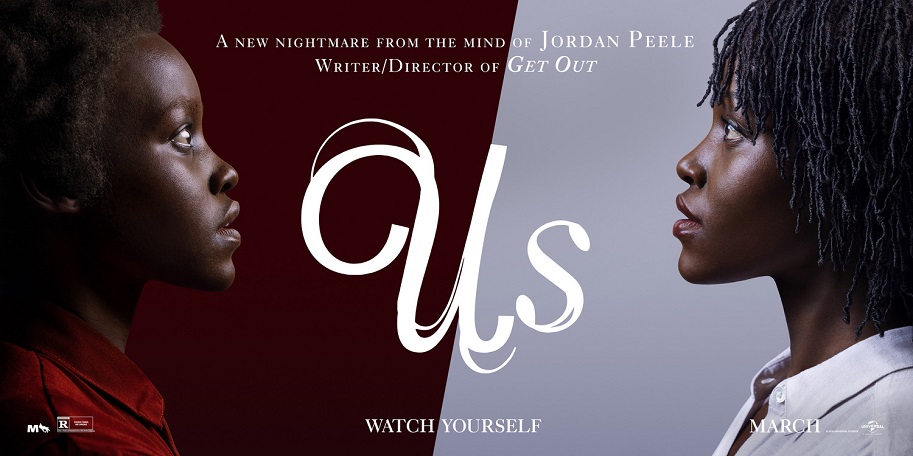
Review: “Us” by Merritt Mecham
Jordan Peele is one for details. As Us progresses you may realize that sandals have never seemed so menacing, that rabbits definitely don’t have souls, and that we were all blind to how creepy the words “hands across America” are. It’s this specificity that produces the most unnerving elements of Peele’s sophomore film— and makes it all the more zany, hilarious, and chilling.
While on vacation with her family in Santa Cruz, Adelaide (Lupita Nyong’o) relives a traumatic event from her childhood involving an encounter with a doppelgänger. Her haunted memories gradually escalate until she literally comes face to face with them when her evil twin— and an entire evil duplicate family— show up in her driveway, clad in red coveralls and tan sandals, bearing golden scissors.
What happens from that point is best left to be discovered in a dark movie theatre with popcorn on hand to stress-eat, but the wild journey Adelaide and her family go through is likely more expansive and bizarre than you would expect. Peele’s film makes sweeping observations about America and suppression, privilege and revenge, while never losing sight of that old horror adage: the real monsters are human.
Comparisons to Get Out are inevitable, but Us fits into an entirely different subgenre of horror. At times the violence is slasher to the point of slapstick, featuring splattered blood and acrobatics and makeshift weapons. References to Michael Jackson’s “Thriller,” Jaws, and video games make it clear that violence is so entrenched in American culture that it could never be the film’s consummate terror. As the title promises, killing the imposters isn’t as important as coming to terms with what they represent. It’s also a comedic film, with familiar family dynamics and some truly inspired needle drops keeping the film funny even through dark moments.
Peele’s visual language is unflinching and patient, straying far from the gray palette and quick-cutting that’s currently popular. The cinematography alludes to some Spielbergian techniques (such as long reaction shots) but ultimately establishes its own style, using centered framing, slow dollys, wide shots, and bird’s eye view to great effect in revealing the unexpected. It’s refreshing to see so much of the characters between cuts, which showcases Lupita Nyong’o’s incredible, for-the-ages performance.
At times the film gets caught up in its own logistics and ideas, and those looking for symbolism and analogies will likely find an over-abundance, many of which lead to dead ends. But taken at face value, the details and hyper-specificity in its design enhance the film’s nightmarish effect, like a dream where random inclusions feel significant even though you’re not sure why.
One of the last sequences in the film features a stunning montage that cross-cuts a beautiful dance with a terrifying showdown, marrying beauty and horror. Similarly, whether or not the film’s ideas (and ending) land for you, Us is undeniably gripping in its dance between defining and defying the idea of “us” versus “them.”
About Merritt Mecham
Hello! My name is Merritt, and I’m a writer based in Salt Lake City, UT.
I have work experience in radio, film, and education. These days you can find me working in the Film & Media Arts Department at the University of Utah.
I’m also available for freelance writing. Read my work.
I’d love to work with you! Check out my resume.
-
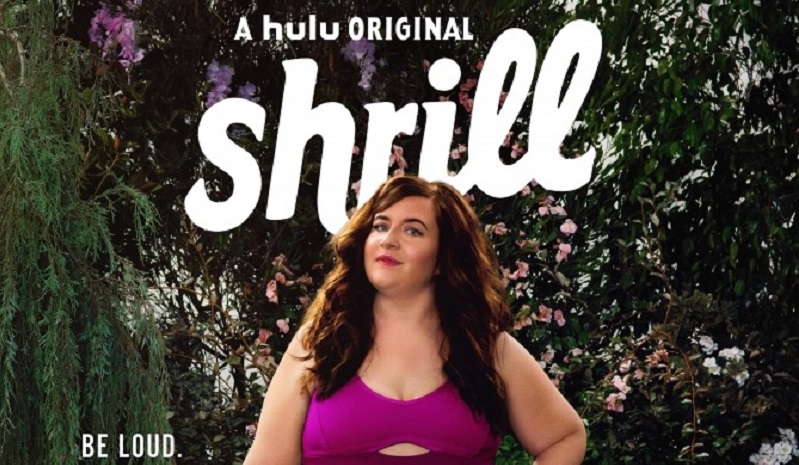
“Shrill” and the Power in Fucking Up
Spoilers for the first season of “Shrill” below.
Since it was released last week, Shrill has been lauded for everything from its costuming to its celebration of body diversity. It is revolutionary to see a simple, joyous depiction of fat women succeeding, having sex, and jumping into swimming pools. The show refuses to apologize for showing fat women as they are.
Shrill is not unique in showing fat women as beautiful and deserving of love. That’s been done before by Isn’t it Romantic and Hairspray and a number of body-positive marketing campaigns. However, that depiction has skewed toward cisgendered women who possess white skin, conventional proportions, and able bodies. In fact, most representations of fat women simply allow for another rigid recipe for women to conform to. Despite the banner of inclusivity, the current capitalistic iteration of body positivity still requires fat women to be conventionally attractive, submissive, feminine, amiable, and, most importantly, apologetic about their size. In other words, they must be otherwise perfect to compensate for the perceived flaw of fatness.
At the beginning of Shrill, Aidy Bryant’s Annie has internalized this idea. In addition to compulsive “I’m sorry!”s punctuating her every sentence, Annie’s choices show that she is more eager to make others comfortable than herself. She eats “thin menu” food which her friend Fran (Lolly Adefope) says “looks like a stillborn puppy.” She wears dark, loose clothes. She’s overly forgiving to her sort-of-boyfriend Ryan (Luka Jones), who treats her terribly. She looks past her boss Gabe’s (John Cameron Mitchell) fatphobic and dismissive comments.
No moment in the show expresses this belief as poignantly as Annie’s pregnancy in episode one— the result of Ryan’s preference to “raw dog.” He asserts this habit and Annie can’t quite bring herself to refuse. “It’s just he liked me, and I didn’t want him to stop liking me… so I just went with it,” she says. Of course, this means Annie must deal with the consequences of Ryan’s thoughtlessness. As she decides to get an abortion, she briefly wonders if she should continue the pregnancy. While talking to Fran, Annie confesses her heartbreaking reality:
“There have been moments in my life where I like didn’t think I would ever get to have [a husband and children]… because of what I looked like or because there’s a certain way your body is supposed to be and I’m not that, and that maybe if I was just sweet enough and nice enough and easy going enough with any guy that that would be enough for someone.”
This idea that she must be “sweet enough and nice enough and easy going enough” permeates through Annie’s life— evidence of her belief that she must sacrifice herself in order to compensate for her fatness.
This changes when Annie gets an abortion. Instead of people-pleasing perfectionism, Annie does something for herself. “I got myself into this huge fucking mess, but I made a decision, only for me, myself, and I got myself out of it,” she says. “I feel very fucking powerful right now.” Her experience serves as the impetus to stop apologizing for existing and start pushing back.
But pushing back is inevitably messy. And this is where Shrill feels most revolutionary: it not only shows fat women who learn to celebrate their beauty— it shows fat women making mistakes.
And boy, does Annie make some mistakes. She continues to forgive Ryan despite his immaturity and bad behavior. She posts on her work website without editorial permission, and then quits her job (though, given Gabe’s fatphobia and rudeness, that’s not really a mistake). She takes speaking her mind too far, consequently hurting her parents and sending her mom into emotional turmoil. She stands up her friend Amadi (Ian Owens) and bulldozes him in conversation. She pushes Fran so far that their friendship splinters, and Fran starts ignoring Annie’s calls.
By the end of episode 6, Annie has alienated so many people in her life that she’s left alone. And alone she decides to confront the troll who’s been commenting on her articles. Having gotten the troll’s home address, she walks to his house and rings his doorbell. “I’m a real fucking person,” she says.
It could be disheartening to watch someone make so many mistakes, but Shrill never loses sight of the fact that there’s power in the ability to fuck up. “I got myself into this huge fucking mess, but I made a decision, only for me, myself, and I got myself out of it.” Annie says in episode one, and that statement could be the show’s thesis. Annie realizes how much effort she’s put into making up for her fatness. “I’ve wasted so much time and energy and for what? I’m fat! I’m fucking fat,” she says in the climactic speech she gives in episode 4. Shrill trumpets the fact that fat women have the right to be independent and to make mistakes, just like everyone else. Annie’s done trying to make other people comfortable, and so starts living for herself.
Leaving the troll’s house, Annie picks up a planter and throws it at his car, breaking the window. She runs away, coming directly toward the camera, demanding attention, relishing her transgression, and wearing an expression of unadulterated glee.
About Merritt Mecham
Hello! My name is Merritt, and I’m a writer based in Salt Lake City, UT.
I have work experience in radio, film, and education. These days you can find me working in the Film & Media Arts Department at the University of Utah.
I’m also available for freelance writing. Read my work.
I’d love to work with you! Check out my resume.
-
ACTOR HELEN MIRREN ENDORSES SIXTH WOMEN’S VOICES NOW FILM FESTIVAL
There’s just a few more days to check out the films!ACTOR HELEN MIRREN ENDORSES SIXTH WOMEN’S VOICES NOW FILM FESTIVAL
A Globally Inclusive, Online Women’s Rights Film Festival Celebration
Los Angeles, CA (March 8, 2019) — Women’s Voices Now (WVN), a 501(c)3 non-profit using the power of social-change media to advance women’s and girls’ rights, announces their 6th annual online film festival. In celebration of International Women’s Day, WVN invites the global public to view the winning films, online, from March 8 to March 31, 2019.
The title of this year’s festival is: We Are the Ones We’re Waiting For. The five winning films illustrate this theme by highlighting how traditional stereotypes of women characterize females as fragile and prone to victimhood. Character assumptions like these inform us that women are passive and infantile. In this paradigm, women become the prey of society’s darker elements. We Are The Ones We’re Waiting For portrays women in their truths: resourceful, indefatigable, brave, hopeful, and determined. They remind us that women need not wait for an external liberator. The hero — she is within.
“Women’s Voices Now carefully selects films and filmmakers to its festivals that have the capacity to catalyze positive social change. With a world that is so connected, yet, at the same time, so polarized, we need exposure to stories that remind us of our shared humanity. The winning films of ‘We Are the Ones We’re Waiting For’ tell stories that move us to empathy. When it comes to women’s rights we need empathy because we must all feel the necessity for this movement. After all, it is a human rights struggle, the success of which, ultimately, serves to improve the status of all,” said Helen Mirren, Actor.
“The winning films of the 2019 WVN Film Festival allow us to bear witness to some of the most difficult realities women face today and they task our hearts with remaining open. Our differences are certainly real, but where and when it matters — moments of suffering, joy, challenge, and victory — our needs and our desires are all the same,” said Heidi Basch-Harod, Women’s Voices Now Executive Director.
228 films from 43 countries entered this year’s festival to compete for cash prizes in the categories of documentary feature, documentary short, narrative short, experimental, and student/youth. To view the official film festival selection for 2019, click here.
HOW TO VIEW THE WINNING FILMS (MAR.8-31, 2019):
The winning films from the 2019 WVN Online Film Festival will be available to rent and view through Vimeo Pay-Per-View for $4.99, from March 8, 2019 (International Women’s Day) through March 31, 2019, via https://vimeo.com/ondemand/wvnfilmfest2019.
All proceeds from the Vimeo pay-per-view will go toward cash prizes for the 2020 WVN Online Film Festival.
ABOUT THE WVN ONLINE FILM FESTIVAL:
The WVN Online Film Festival is an annual festival that takes place around International Women’s Day. The festival celebrates and awards the best social-change films from around the world that highlight women in film and women’s rights issues.
Each year, films compete for cash prizes, media features and the opportunity to have their films added to the WVN Film Archive for global promotion and viewing. The Women’s Voices Now Online Film Festival is for films and filmmakers interested in exposure and advocacy, and teaming up with WVN to have their films seen around the world to bring audiences from empathy to action in the global women’s rights struggle.
ABOUT WOMEN’S VOICES NOW:
Women’s Voices Now (WVN), a 501(c)(3) non-profit organization, advocates women’s rights by using the power of social impact film to influence media and culture. Using an intersectional and intergenerational approach, we work online and on the ground to educate, inspire and move audiences from empathy to action by connecting conscientious filmmakers with agents of change, advocacy organizations, and civil society members. WVN carries out its mission with a free streaming archive of international women’s rights based films, an annual online film festival, educational programs, screening events, and multimedia workshops and trainings.Through our Fiscal Sponsorship Program, WVN supports the important work of filmmakers striving to create impactful and timely cinema addressing women’s rights issues. WVN has held special consultative status to the United Nations Economic and Social Council (ECOSOC) since 2017.
CONTACT: media@womensvoicesnow.org
-
“Keira Knightley On Telling Female Stories And Welcoming The Future For Women In Film”
“‘I think there’s a real push to get more female-driven narratives. I think there’s a real push to get more women behind the camera, which is what we massively needed,” she considers of the on-the-ground changes she has seen emerge from the past 15 or so months.”
Read the full “Vogue” article HERE
-
“How Kristine Belson Turned Up the Heat at Sony’s Sleepy Animation Shop”
“Belson says she is satisfied with the female representation in her division’s executive ranks, which includes production head Pam Marsden and senior vice presidents of creative Jenny Marchick and Karen Toliver. However, she sees room for improvement in the gender makeup of the studio’s creative leadership, a margin she hopes to bolster by the end of 2019. Diversity, she argues, improves the films that Sony Pictures Animation makes.”