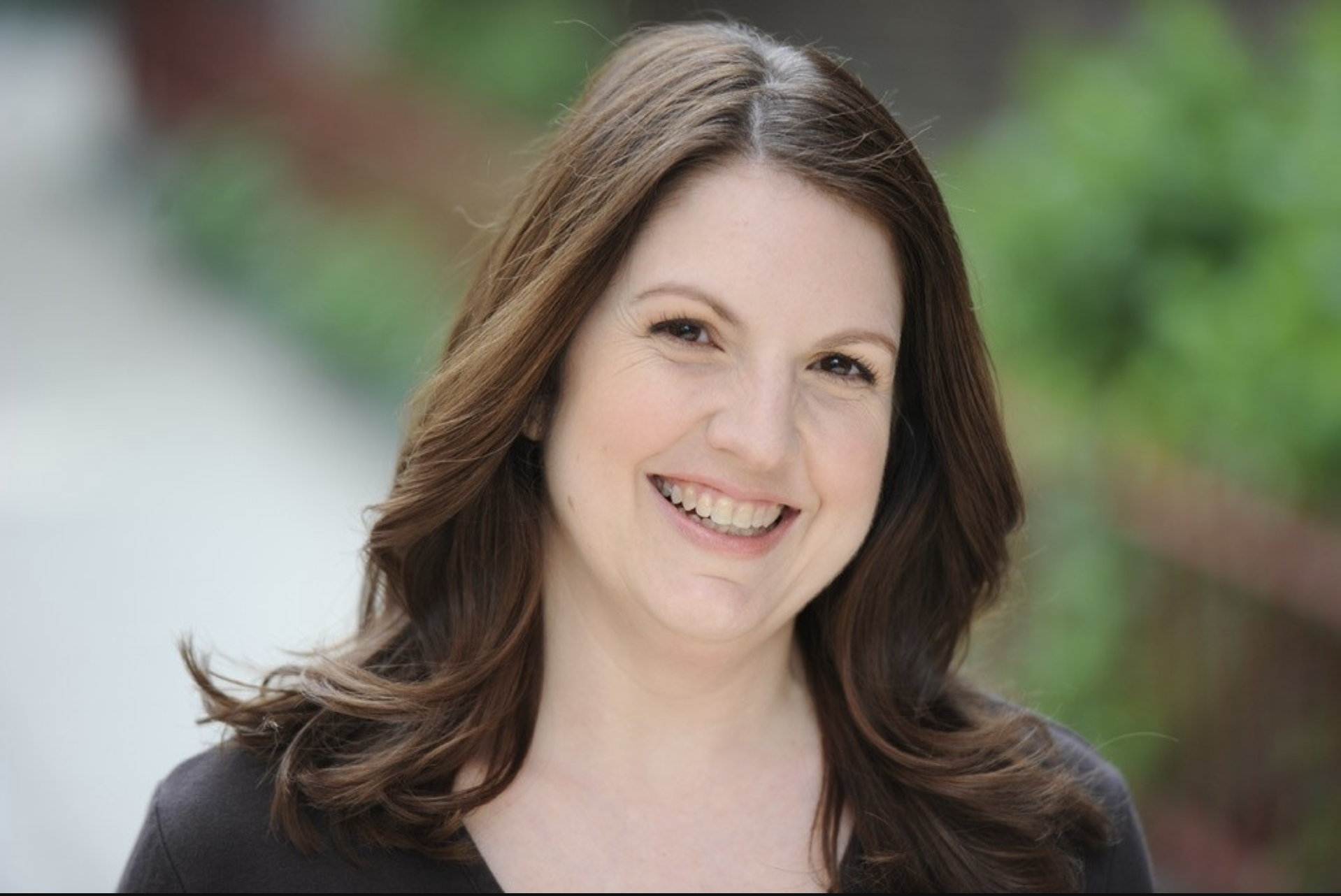
“You already belong. You’re enough exactly as you are, and you’re still allowed to grow.”
Actor & Producer — @elenamschick

What pulled you into film and TV in the first place?
For me, it has always been about storytelling and listening.
I grew up in a tiny three-bedroom, one-bath brick row home in Southwest Philadelphia, listening to the stories of my grandparents, my parents, my family and the friends who came through our door. I learned that everybody has a story worth hearing. It may make you uncomfortable. It may make you laugh, cry, angry, happy or sad. I think we need to embrace all of it.
Listening is incredibly important to me, in life and in my creative life. You can’t truly tell someone’s story unless you’re willing to listen to them first.
I’ve never really thought of what I do as pretending or playing make-believe. The best way I can describe it is that I imagine a zipper at the top of my forehead. I unzip Elena, step out of her, and step into the woman whose story I’ve been entrusted to tell. When I brought Evelyn to life, I was Evelyn. When I brought Sister Agatha to life, I was Sister Agatha. I want to breathe life into these women and allow them to be seen and heard.
Even in my everyday life, I’m a door holder. If I’m leaving the train station or walking into Wawa and I see someone coming, I hold the door. They don’t have to be right behind me. I’ll wait.
Maybe storytelling is another way of holding the door open.
You make room for somebody else to come through. You listen. And then you step aside and let them be seen.
What do you think the industry gets most wrong about women like you?
That there is an expiration date on us.
There is still this idea that women somehow have less to bring to the table once they’re no longer 25. And God forbid a woman tells her real age and she’s over 40. Somehow we’re supposed to fade into the background, cover everything up and pretend the years haven’t happened.
I don’t want to hide my laugh lines and wrinkles. Those laugh lines and wrinkles tell stories. They’re a roadmap of a life lived, of laughter, loss, love, heartbreak, joy and everything in between.
And there is a double standard. Men are allowed to age on screen in a way women still aren’t. Nobody looks at a man’s face over 40 and wonders why he hasn’t disappeared from the camera.
And I’m not saying youth doesn’t belong. Youth belongs. Middle age belongs. Older age belongs. Every stage of a woman’s life has stories worth telling. We shouldn’t have to erase one generation of women to make room for another. There is room for all of us.
I’ve experienced versions of that double standard throughout my life, in my legal career and in my creative career, and I’m tired of it.
I’m finding my voice and using it. And I want other women to find theirs too. We don’t have to push another woman out of the way to make room for ourselves. We can come along on this journey together, tell the truth about who we are and what we’ve lived, and hold the door open for the woman coming behind us.
What does success mean to you?
Success means leaving my legal career behind and building EMS Productions 3, the production company my husband Ed and I founded together, into a place where we can tell the stories we each want to tell and invite other people through the door to tell theirs.
I want women to entrust us with their stories. I want to build a thriving, supportive, loving and fun creative environment where everyone has a seat at the table and feels like what they bring to that table matters.
And there better be cold Tastykakes on that table, especially Peanut Butter Kandy Kakes. They’re my favorite.
Success means being bold. Taking chances. Making the story because we believe it deserves to exist, instead of worrying ourselves to death about whether it will find an audience or whether some critic is going to tear it apart.
Let’s make it. Let’s put it out into the world. Let’s support it, believe in it, and then let it take whatever journey it’s going to take.
We can’t control everything that happens to something once we release it into the world.
But we can control how much truth, love, care and courage we put into making it.
And then, as my Mom always said, “It is what it is.”
What are you most proud of that most people don’t know about?
I’m most proud of the fact that I kept going.
I built my creative career while working in the legal field, being a wife and mother, caring for people I love and navigating all the ordinary and extraordinary things life puts in front of us.
There were days when I would work all day, get on a BoltBus to New York for a ten- or fifteen-minute audition, take the two-hour ride home, walk through my door around midnight, sleep for a few hours and get up the next morning to go right back to my day job. And you know what? My feet barely touched the ground on those rides home. I was exhausted, but I was so happy because I was doing the thing I loved.
When I finally admitted to my parents that I didn’t want to go to law school and that what I really wanted was to act, I was terrified they would be disappointed. My Mom looked at me and said, “Why didn’t you tell me sooner? We would have supported you.”
And she did.
She would circle things in the TV Guide and tell me, “You would be good on this show.” When I appeared on The Following, my parents recorded the episode and watched it over and over because they were so proud to see me on that screen. My Mom would leave me voicemail messages telling me, “Don’t get discouraged. Keep going.”
I still hear her saying that.
I’m incredibly proud of my daughter, and I hope that through my own journey I can show her—and maybe another woman who needs to hear it—that our paths don’t have to be straight or easy. You can work the day job. You can get up early. You can use the PTO. You can take the bus. You can start later than somebody else.
Just do the thing.
Because if you stop now, you’re never gonna know if you could have grabbed that brass ring.
I believe in all of us.
What keeps you going when the industry makes it hard?
Stubbornness.
I’m stubborn about my dreams. I think that helps.
I knew when I was six years old that I wanted to be an actress. I was watching The Young and the Restless after school with my Mom and Grandmom, and there was a storyline where Dr. Casey Reed thought the patient on her treadmill was her stalker and started increasing the speed during his cardiac testing. Six-year-old me was completely fascinated.
I remember going to my school library with my friend Patricia afterward. She started pulling books about medicine off the shelves, and I thought, “No, I don’t want to be a doctor. I want to be an actress.” I took the medical books home and read them anyway.
But I knew.
All these years later, that six-year-old girl is still in here, and I’m not giving up on her.
This industry can be incredibly hard. You hear no. You hear nothing at all. You can do work you’re incredibly proud of and have no control over what happens next.
So I stopped waiting for permission.
If the door doesn’t open, I’ll build my own. I’ll blaze my own trail. And once I get that door open, I’m holding it for everyone coming behind me.
I’m relentless about my dream.
I’m not waiting for permission anymore. I’m done with that.
What is one piece of advice you wish you had heard earlier?
You’re enough.
Your hair doesn’t have to be longer, shorter, lighter or darker. You don’t have to make yourself smaller, bigger, perkier, quieter or louder because you think that’s what somebody else wants you to be. Just be you. You’re enough.
But being enough doesn’t mean you’re finished.
Keep training. Keep learning. Keep going to class. Keep your mind open. Push yourself outside your comfort zone because you never know what you might discover there.
And that’s not just advice for acting. That’s advice for life.
We change. We evolve. Our tastes change. Our outlook changes. Something that terrified us ten years ago might be the very thing we’re running toward today. Never become so comfortable with who you are that you close yourself off to who you might become.
Train. Prepare. Submit. Audition. Pursue the opportunities that excite you. Create your own opportunities too.
But don’t do any of those things because you think you need somebody to knight you and declare that you finally belong here.
You already belong.
You’re enough exactly as you are—and you’re still allowed to grow.
Anything else you’d like to share?
I’m incredibly excited about what Ed and I are building with EMS Productions 3.
I want people to want to come work with us. I want people to trust us with their stories. I want them to collaborate with us, laugh with us, take chances with us and help us grow this company into something bigger than any one of us.
I want EMS Productions 3 to be a place where people are supported, respected and heard. A place where we help each other. Where somebody can walk in with a story they don’t know what to do with yet and know we’ll listen.
I want to build something that honors the people who came before me and makes them proud. And someday, I would love to hand this company down to my daughter and have her be proud of what we built—and then make it her own.
Most of all, I want EMS Productions 3 to help people. I want us to create opportunities, tell stories that might otherwise go untold and make room for people who haven’t always been given that room.
All are welcome.
The door is open. The table has plenty of seats. There’s room for you.
Just bring the cold Peanut Butter Kandy Kakes.