What pulled you into film and TV in the first place?
In 2005, I made the drive across the US from NYC to LA following the abrupt end of my first dream, Broadway musicals, which pretty much began and ended on September 11, 2001. I’ve been a natural storyteller and Creative all my life. The medium changed, but the passion for storytelling never has. I couldn’t have known that shift from stage to set would bring me so much joy and feel like “Home.” It’s the type of chaos, collaboration, and problem-solving I crave.
What do you think the industry gets most wrong about women like you?
It’s challenging to answer what I believe the industry gets most wrong about women like me because I’ve never quite fit into a box. I suppose the honest answer is that my greatest challenges never came from the work itself, but in the gatekeepers, those in between talent and decision-makers. I’ve also had bad timing: getting established just days before the writers strike in 2007, then rebuilding and reinventing myself in time for the pandemic and our recent strikes. The industry has shifted yet again.
What does success mean to you?
Success to me is the ability to thrive doing what I’m most passionate about, reaching toward my ultimate potential (do we ever really get there?), and hopefully reaching back to inspire others to do the same. Our stories need to be told. I have a lot more in me!
What are you most proud of that most people don’t know about?
I am deeply proud of my ability to learn, adapt and thrive despite countless obstacles and events beyond my control. But what I am secretly proud of are all of the fellow creatives I’ve been able to elevate and get employed over the last 20+ years.
What keeps you going when the industry makes it hard?
What has always kept me going remains an insatiable creative appetite. I’ve been both blessed with and cultivated a wide range of skills applicable to the Arts and Entertainment industries. But Creativity isn’t something I’ve been able to “turn off.” I’m constantly downloading new ideas and wanting to breathe them to life.
What is one piece of advice you wish you had heard earlier?
I entered Hollywood with no connections, and no clue about “The Biz.” In retrospect, I would have fared far better having a mentor. Someone to help me fine-tune focus and avoid some of the pitfalls of the industry. Especially where it came to navigating patriarchy.
Anything else you’d like to share?
I have many projects in various stages of development. two film scripts (one, I’m penning into a novel, the other could be a phenomenal series), my autobiographical blog, my podcast (GATMPodcast), my fashion designs, and my photography (I’m a self-taught automotive/street art photographer)… I think I’m over “creating my own projects,” lol. I’m hoping to connect with fellow filmmakers/writers/storytellers to finish and elevate these efforts and conceive new ones, together!
What pulled you into film and TV in the first place?
My path into film and TV started because a teacher didn’t show up.
I was on my first day at Brockton High School, training to become a teacher after leaving public relations. I was supposed to observe a master teacher, but when the bell rang, there was no teacher. Just a room full of teenagers looking at me like, “Well?”
I wasn’t even allowed to teach yet, so I ran across the hall for help and met another teacher, Diane Ayache. Later, we got talking, and I mentioned that I had written a novel. Diane said, “You should meet my cousin.”
Her cousin was Oscar-nominated director Matia Karrell.
Matia read my novel, then asked me over lunch if I could turn it into a screenplay. I had absolutely no idea how to write one.
But I said yes.
I bought some books and Final Draft software, and wrote a truly terrible first draft. Matia read the whole thing anyway, gave me notes, and kept mentoring me.
And somewhere along the way, I realized I loved screenwriting. I loved thinking in scenes, writing dialogue, and telling a story visually. I loved that a script could start with one person at a keyboard and eventually become something actors, a director, and a crew bring to life.
So basically, I got into screenwriting because one teacher never showed up — and the right one did.
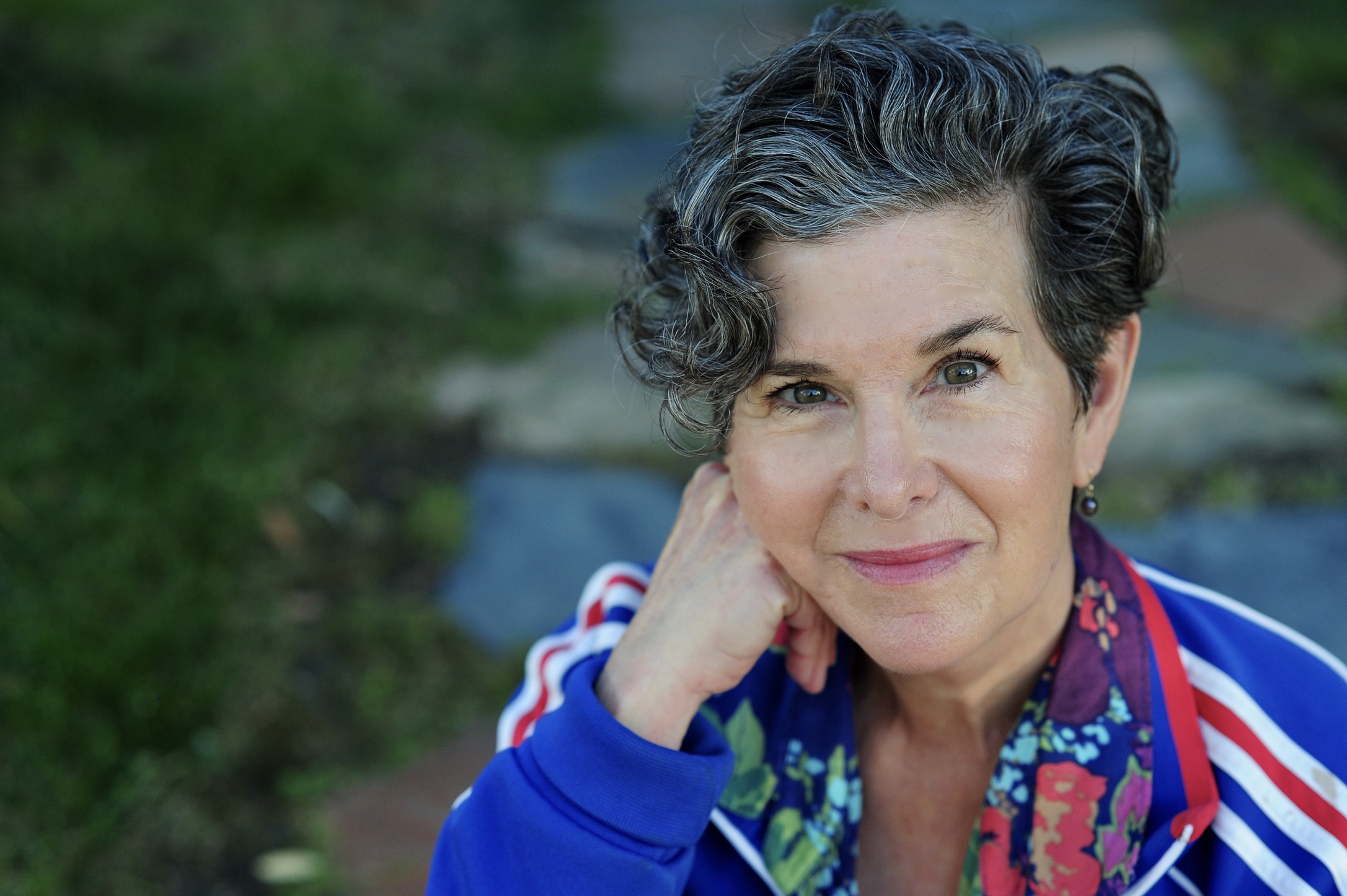
Screenwriter Caitlin McCarthy in her hometown, Worcester MA.
What do you think the industry gets most wrong about women like you?
I live in Massachusetts. I’m a Gen Xer. I’m writing while female. Wrong location, wrong age, wrong gender. No trust fund. No family connections. Everything I have, I’ve built through the work and the relationships I’ve made along the way.
I think the industry can be too quick to decide when a woman’s “moment” is supposed to happen. There’s still this idea that if you haven’t broken through by a certain age, maybe you missed your window.
I don’t buy that.
I’m a better writer now because I’ve lived more, failed more, survived more, and have more to say. People may look at me on paper and think I’m past my prime.
I’m only getting started.
Screenwriter Caitlin McCarthy in her hometown, Worcester MA.
What does success mean to you?
Like a lot of writers, I’ve spent years balancing writing with a survival job. That means writing before work, after work, on weekends, and at hours when normal people are asleep. It takes a lot of sacrifice, caffeine, and stubbornness.
So for me, success is really about freedom. I want to make a living telling stories, choose the projects that actually excite me, and walk away from the ones that don’t.
I’ve spent a long time answering to more than one boss. I’d really like to answer to just one: the writing.
What are you most proud of that most people don’t know about?
I’m most proud of my ability to bounce back.
I’ve had some crushing disappointments in this business and dealt with a few people who were difficult or flat-out toxic. There have definitely been moments when I wondered whether I wanted to keep doing this.
But I did.
I kept writing. I kept putting the work out there. I kept building new relationships and finding better people to work with. I’ve learned that resilience isn’t pretending something didn’t hurt. It’s letting it hurt, learning from it, and then getting back to the page anyway.
People usually see the wins. They don’t always see how many times you had to get back up to get there.
What keeps you going when the industry makes it hard?
I can never not be creative. It’s too much a part of who I am.
Even if something I write is never produced, I still made something out of nothing. I finished a story that only existed in my head before. That means something to me.
And then, eventually, another story starts calling.
The industry can reject the work, ignore it, mishandle it, or never make it. But it doesn’t get to own the part of me that created it.
I won’t let this business rob me of my creativity.
That belongs to me.
Screenwriter Caitlin McCarthy in her hometown, Worcester MA.
What is one piece of advice you wish you had heard earlier?
This business has a remarkable number of people who mistake money and a job title for divine appointment. They expect worship while making life hell for everyone around them.
Eventually, you have to see them for what they are: ridiculous. Don’t let anyone push you off your path. Laugh when you can. It takes away their power over your mind and heart.
The bonus? Terrible behavior makes great character material. Some people practically write themselves.
So keep going, keep your sense of humor, and keep notes.
“You do not need to make yourself smaller, safer or easier to understand in order to belong in this industry. The work becomes stronger when you stop trying to fit someone else’s idea of what a filmmaker should be and start making the stories only you can tell.”
What pulled you into film and TV in the first place?
I spent nearly 15 years in theatre, performing in and directing works of classical drama. That experience taught me how deeply character, conflict and human behaviour can be explored through story. Over time, I began to feel that I had developed my own voice and wanted to create worlds rather than only interpret existing ones. That is what pulled me toward screenwriting and filmmaking, the chance to tell my own stories, especially about women, intimacy, power and the contradictions we often keep hidden.
What do you think the industry gets most wrong about women like you?
I think the industry often underestimates women who are both emotionally driven and ambitious. There is still a tendency to treat sensitivity, intimacy and stories centred on women as somehow smaller or less cinematic. I believe those qualities can be a source of enormous creative strength, and that women should not have to become less complex, less feminine or less personal in order to be taken seriously.
What does success mean to you?
Success means having the freedom to keep making work that feels true to me, films I care deeply about, with people I respect, without having to compromise the core of what I want to say. It also means building a career strong enough that I can keep choosing difficult, personal stories and give them the scale and audience they deserve.
What are you most proud of that most people don’t know about?
I’m proud that I kept building a life, a family and a creative career after losing both of my parents very young. Most people only see the work I do now, but they don’t see how much of my life was built from scratch. I’m proud that I turned that experience into strength without letting it make me less open, less ambitious or less capable of love.
What keeps you going when the industry makes it hard?
I genuinely cannot imagine my life without this profession. Filmmaking is not simply what I do, it is part of who I am. The industry can be slow, difficult and full of rejection, but the need to create never disappears. I keep going because there are stories I cannot let go of, and because making them real is one of the ways I understand myself and the world around me.
What is one piece of advice you wish you had heard earlier?
Trust your own voice earlier. You do not need to make yourself smaller, safer or easier to understand in order to belong in this industry. The work becomes stronger when you stop trying to fit someone else’s idea of what a filmmaker should be and start making the stories only you can tell.
Anything else you’d like to share?
I’m currently developing my first feature films and am especially interested in connecting with producers, co-producers and creative collaborators who are drawn to emotionally complex, female-led and queer stories. I’m based in Cyprus and work internationally. More about my work can be found on IMDb and through my professional social media.🤗
What pulled you into film and TV in the first place?
I’ve always lived in a world of stories. The ones I see happening and the ones I form out of normalcy even when no one else sees the story I see. And film gave me a place to connect that love with passion.
What do you think the industry gets most wrong about women like you?
I wouldn’t know yet. I believe perception is very personal and I don’t tie any of it to my personal experience.
What does success mean to you?
Impacting lives with storytelling.
What are you most proud of that most people don’t know about?
My mind and how it works.
What keeps you going when the industry makes it hard?
My love for stories and why I’m doing what I do in the first place.
What is one piece of advice you wish you had heard earlier?
The process is the reward.
Anything else you’d like to share?
Yes, I’m always open to collaborators and funding. I mean, that’s the biggest struggle being an independent filmmaker.
What pulled you into film and TV in the first place?
I was a child actor; I’ve loved being on set since the age of 5.
What do you think the industry gets most wrong about women like you?
The patriarchy is insidious and subversive. Sometimes they can’t see talent when it’s staring them in the face because the ideas you have, and even the way you look, are foreign to them.
What does success mean to you?
No more waiting. Having what I create actually seen and not sit on a shelf. Having a community of folks who believe in my skill to tell great stories.
What are you most proud of that most people don’t know about?
I’ve been supporting fellow women behind the camera since the beginning. Even the ones who haven’t supported me.
What keeps you going when the industry makes it hard?
My personal and creative life. My imagination. My college boyfriend/husband, our kids, their kids. Stories, faces. Drawing, singing, decorating, fashion, dinner parties. Movies! Books! Music! Art! Nature in all her wonders: the wind and sky, the trees and flowers, the mountains and sea.
What is one piece of advice you wish you had heard earlier?
Nobody knows anything. Listen to your gut. I heard it but didn’t truly believe it. Believe it!
“Be careful whose opinion you take about your career. The loudest voices telling me this industry was not for me were people who knew nothing about it.”
What pulled you into film and TV in the first place?
I came to film and television by a somewhat indirect route. When I first left school, I was unsure what I wanted to pursue, and at my mother’s encouragement I enrolled in business studies. I completed a full year before recognising it was not the right fit. I then moved into IT, which I found equally unfulfilling, and eventually left college to take an apprenticeship at a clothing store.
The turning point came when my mother saw a newspaper advertisement for a Prince’s Trust programme in creative media. At eighteen, I joined a week-long intensive course covering video, photography and music production. I had studied photography at school and loved it, and the course rekindled that passion while introducing me to moving image. I was fortunate to be mentored by Simon Green, whom I still hold in high regard. By the end of that week, I knew this was the direction I wanted to take.
I returned to college to study media, working as a wedding photographer and in other roles alongside my studies. I also gained hands-on experience with CCC Productions on a range of low-budget projects, including a short film, television pilots and music videos. I then secured my first role at the BBC as a production office runner, and later returned to work on The Big Questions. It was at that point that film and television became not just an interest, but a career.
What do you think the industry gets most wrong about women like you?
I think the industry still underestimates the depth of experience women in my position bring. I have spent a decade working across independent features, scripted series, branded content and large-scale international live events, and that experience is not only technical. It is experience with people, with problems, and with the full arc of a production from prep through to delivery. That tends to be assumed rather than recognised, and it is often assumed downward.
The second thing, and perhaps the more interesting one, is patience. It is frequently mistaken for softness, when in practice it is one of the most useful things you can have on a set. When something goes wrong, or someone makes a mistake, the response determines whether you lose an hour or lose the day. In my experience, the women I work with handle those moments as well as anyone in the industry, and often better, because they are focused on solving the problem rather than on being seen to be in charge of it. That is a professional skill, not a temperament.
It is changing, slowly. But the assumption still has to be corrected more often than it should be.
What does success mean to you?
Success is quite a personal question for me. I did not come from a background where this was an obvious path. I grew up and studied in low income areas, and there was not a great deal of expectation that this industry was available to me. A fair number of people told me I should not be in it at all, usually people who knew nothing about it.
So part of what success means is simply the body of work. I have worked on films that have played in theatres, with A-list talent, with some of the biggest names in golf, and I have seen a great deal of the world through this job. I know that I am very good at what I do, and I do not say that lightly.
But the honest answer is smaller than that. Success, to me, is the people in my life taking a genuine interest in the work. Very few people ask me about it, I suspect because they do not really understand it. What I love about being on set is that everyone there does. You ask someone what they have been working on, they ask you the same, and you both understand the answer. Success would be having a little more of that outside of work. Someone asking what I am up to, and finding it as interesting as I do.
What are you most proud of that most people don’t know about?
What I am most proud of is the trust people place in me. I have worked with a great many first-time directors and people who are new to the industry, and they often come to me having spent years writing, rewriting and testing a script. It is something they have poured themselves into, and they want more than anything to see it made.
When they bring that to me, they are trusting me to take care of it: to protect it, to steer it through production and to turn it into something real. That is not a responsibility I take lightly. I often tell people, bring me your project and I will make it a reality, and I am proud that I can keep that promise, particularly at the lower budget end, where there is very little margin and every decision counts.
Most people never see that side of the job. What they see is the finished film. What I see is the moment someone realises the thing they imagined for years actually exists, and that I helped get it there. That is what I am proudest of.
What keeps you going when the industry makes it hard?
I have been in this industry for over thirteen years, and I have worked across almost every part of it. I have made things with nothing more than one other person and a camera. I have produced student projects of my own and worked on guerrilla-style independent films at the very lowest end of the budget scale. I have also filmed tournament openers for international golf events that went out to broadcast, worked with major commercial sponsors and corporate clients in New York, and collaborated with people whose time is worth a great deal more than mine, helping bring their stories to life. I have not yet worked on a large-scale Hollywood production, but I have seen enough of this industry to know where I fit in it.
The hardest period for me was my move from the UK to the US, just over a year ago. I turned down a significant opportunity in the UK to relocate for my husband’s job, and for a while my confidence took a knock. I genuinely questioned whether this was still the right path. Then I went through four rounds of interviews with a highly respected US production company, and they wanted me. That was a turning point. It reminded me that however tired I am, and however I feel on a given day, I am good at what I do. I simply need the right opportunity, and I am confident it will come. Several have come my way recently that I have had to turn down because of scheduling, and I believe those will come back around.
So what keeps me going is that certainty. Whether it is a low budget independent, a corporate shoot or, one day, a Hollywood set, this is what I will be doing for the rest of my life.
What is one piece of advice you wish you had heard earlier?
The advice I wish I had heard earlier is that it is fine not to know what you want to do yet, but it is not fine to stay on a path simply because someone else chose it for you. I spent a full year in business studies and then moved into IT, largely because it seemed sensible and it was what was expected. I disliked both, and it took leaving college entirely before I found my way to a week-long creative media course that changed everything.
Alongside that, I would add: be careful whose opinion you take about your career. Some of the loudest voices telling me this industry was not for me were people who knew nothing about it. The people whose advice actually helped were the ones already doing the work.
Anything else you’d like to share?
I am a freelance producer, line producer, 1st AD and production manager based in Garwood, New Jersey, about thirty minutes from Penn Station, working across the New York and New Jersey market. My background spans independent features, scripted series, branded content and large-scale international live events.
I am always looking for collaborators, particularly writers and directors working on independent narrative projects. I am a movie buff at heart, and I love narrative structure in all its forms, whether that is film, television, comics or books. If it is a great character-led story with strong bones, it will probably interest me. I especially enjoy working with first-time filmmakers who need someone to help carry a project from script to screen. Low budget does not scare me; that is where I do some of my best work.
I currently have several proof-of-concept projects that have been filmed and are looking for the right homes, so I would love to hear from festivals, platforms, producers or anyone who can help them reach an audience. I also have an exciting feature opportunity that is already partially funded, and I am looking for investors, production partners and collaborators to help get it made.
You can find my work at shannonhammondproducer.com, and I can be reached at contact@shannonhammondproducer.com. For anyone curious about what I watch, I am also on Letterboxd at letterboxd.com/shanh.
What pulled you into film and TV in the first place?
Ideas, of course. A visual vision of stories. The desire to tell them, the desire to create, really.
What do you think the industry gets most wrong about women like you?
…that women can’t be directors or team leaders, that we don’t create great stories… it’s as if no one says it out loud, yet everywhere you look, it’s just men whom we serve.
What does success mean to you?
Simply doing what I love most. Having the freedom to do it the way I envision and desire, without constantly chasing financial gain, and letting my audience see it.
What are you most proud of that most people don’t know about?
With the idea for my feature-length animated film, I think it’s really good, as well as the concept for a series about a raccoon, and the idea for a series that features the most beautiful opening shot I’ve ever seen. I truly think they are wonderful, and I’m proud of them.
What keeps you going when the industry makes it hard?
The love for my stories and how beautiful they are.
What is one piece of advice you wish you had heard earlier?
Don’t wait, just do it. Charge a high price for your services when working on other people’s projects, because while doing so, you aren’t working on your own.
Anything else you’d like to share?
I am an author with six books to my name. I would love to see them adapted for the screen, but I don’t know how to approach studios—for instance, three of them form a fantasy series for teens, and I know the material is fantastic. However, my main goal is to establish a studio to produce my own projects; I am also looking for a producer, as I already have the rest of the team in place. Currently, the team is working on a comic book, but we lack sufficient funding, so we are seeking partners for it—it is a project that is incredibly beautiful, inclusive, and deeply important to us, especially given that we live in Ukraine.
What pulled you into film and TV in the first place?
A Calling? My purpose: love and evolution of myself and the planet via storytelling and creativity.
What do you think the industry gets most wrong about women like you?
Our power, tenacity, creativity, and magic. On purpose. Because in a patriarchy based in capitalism, we are dangerous AF.
What does success mean to you?
Telling well crafted stories that entertain and truly evolve and awaken culture and society to love more and care for each other more on a global level that move the needle, and help us as a planetary society care for, protect, and if necessary save the earth and ourselves. I’m looking for laughter, tears, goosebumps, relief, breath, and full emotional experience, both in the making of it, with fellow healthy artists, the process and the present, as well as the resulting art made.
What are you most proud of that most people don’t know about?
Who I am as a mother and emergency foster mom.
What keeps you going when the industry makes it hard?
Service and activism.
What is one piece of advice you wish you had heard earlier?
Dig deep into life, art, family, love, friends, creativity, meditation, spirituality, and service. Build a rich, deep life that has nothing to do with the industry. Regardless of career success, fall in love with who you are being on this planet.
Anything else you’d like to share?
You can see more at @alysiareiner or www.alysiareiner.com and happy to send a full bio, press kit etc.
“Many people have told me that asking for help is a crucial component of success. All successful people do it apparently. I think if someone had told me that earlier in my career, I would have forced myself to adapt and become better at it.”
What pulled you into film and TV in the first place?
I was studying cultural anthropology at New York University in the early 90s when I caught the Madonna documentary, Truth or Dare. It intrigued me that the filmmaker Alek Keshishian, with no advanced degree in anthropology or sociology, was able to capture something so relevant about the times we were living in. As I walked the long journey from Harlem back downtown to the East Village, I made up my mind to drop out of graduate school and pursue a career in documentary filmmaking. I was twenty-three years old and prone to massive over-confidence when making life-changing decisions. But it worked. My first job was as an editor’s assistant on a documentary about the gentrification of Hoboken, New Jersey. It was shot on 16 mm film and I was responsible for organising clips and splicing them together into reels using a Steenbeck, which I’d learned how to use in the one film production course I took at NYU, the legendary Sight and Sound. From there, I took whatever film crew job I could find, working mostly on music videos, commercials, and very low budget indie films. I worked in any department that would have me, art, wardrobe, A.D., production office. I didn’t care. I had found my people.
What do you think the industry gets most wrong about women like you?
I think the film industry, despite efforts to eliminate gender prejudice, still has a strong male bias. Women’s screenplays are considered “women’s stories,” whereas men’s screenplays are just “stories.” The majority of equity financiers are still men and, while I do not believe they are engaged in any conscious effort to discriminate against female filmmakers, I think they are subject to the same ordinary cultural biases that afflict society as a whole. Thus indie films maintain their male bias. Women are still very much swimming upstream. Here’s an anecdote to illustrate this phenomenon. In 2007 I was tapped to write a lady mobster film for a major studio. I spent the weekend drafting a treatment and some sample pages to show them what I could bring to the project. That same weekend both Jodie Foster and Nicole Kidman starred in films that did not perform particularly well at the box office, The Brave One and The Invasion, respectively. Because these were both female-led movies, the studio behind the lady mobster film pulled the plug because, say it with me now, “women don’t open films.” Now, in that same period a number of male-led movies also underperformed: The Assassination of Jesse James by the Coward Robert Ford starring Brad Pitt, Shoot ’em Up starring Clive Owen, In the Valley of Elah starring Tommy Lee Jones, to name a few. But no one, not a single film executive ever, said the words: “Men don’t open films.” I think what the industry doesn’t get is that audiences sincerely do not care if the lead is female or male. They want great stories. But because executives and financiers are always looking for a way to predict and make rational something that is fundamentally unknowable and therefore unpredictable, they will reach for whatever post-facto rationalization they can find. Gender is one of those things.
What does success mean to you?
I am happiest when I’m making films. I like every part of the process, writing, prepping, shooting, editing. The only parts I don’t like are fund-raising and self-promotion, arguably the two most important components of success. So for me success means the ability to make film after film because someone is financing them and someone else is promoting them. To arrive at this state, I have had to override my horror at asking people for money, as well as finding partners who can help find available funding. I don’t believe in the philanthropic side of film funding (BFI, etc.) so I’m strictly working with equity financiers and sales and distribution companies. When I’ve got three films financed and lined up ready to shoot, I’ll feel successful.
What are you most proud of that most people don’t know about?
I have made a habit of leaving careers at their height. I left my film career in 2001 when I was Vice President of Production at Lionsgate Films and had just produced American Psycho and Buffalo ’66. I left to write novels with absolutely no idea how the publishing industry worked. I learned very quickly how hard it is to find a publisher. But I succeeded eventually. The day my literary agent called to tell me that she had three offers on my first novel, Cycler, was one of the proudest days of my life. After a short bidding war, I sold it and a sequel for a sizable advance. I had left a secure and lucrative career to pursue something completely unfamiliar because that was where my creative impulses led me. And it had worked. Eighteen years later, I left the world of publishing to return to filmmaking. Only now I lived in a new country, the UK, and the industry had changed dramatically. Not wanting to return to producing, I retrained as a script supervisor and caught the tail end of the streaming boom, to rise quickly from assistant script supervisor on low budget gaming films, to main unit script supervisor on big budget action films. I had to swallow some pride to go from indie producer of culturally significant films like American Psycho to assistant script supervisor on a video game I’d never heard of. But it too worked. It was the start of phase two of my film career, which would lead me to directing.
What keeps you going when the industry makes it hard?
I’m fortunate to have a variety of income streams. As a multi-hyphenate I can work as a script supervisor, story editor, screenwriter, director, producer, and editor. I also work across different media, feature films, series, commercials, and fashion films. This makes it easier to earn a living. Also, I’m not intimidated by the grim state of the industry right now. Rather I see it as an opportunity. Working in low budget filmmaking in New York City in the 90s exposed me to great uncertainty and constant flux between flush times and slow times. That period also gave rise to the great boom in independent filmmaking, culminating in The Blair Witch Project, American Psycho, and many others. The film industry constantly goes through periods of uncertainty and chaos. The birth of cable TV, home video, then streaming all disrupted previous business models. People panicked. In the 90s people thought Blockbuster Video was going to kill theatrical. It didn’t. What makes this period of disruption different is that it’s lasting longer than previous ones. Usually the industry settles down into a new normal eventually. But now there is no new normal so financiers are essentially greenlighting into the great unknown. What this means is that filmmakers have to be nimble and resourceful. I feel very comfortable there as I pride myself on knowing how and where to spend money to put value on the screen. The challenge for me is figuring out the distribution landscape so that I can budget projects accordingly and that’s what I’m working on.
What is one piece of advice you wish you had heard earlier?
I was fortunate to be at Lionsgate in the early days, before it was even called Lionsgate. We financed our films through foreign pre-sales. So my job was to find projects, budget them, put together potential cast lists then present them to our foreign sales team. They’d tell me how much they could reliably sell a project for in the foreign market, and if the math added up, we’d greenlight and go. I never had to ask anyone for money. Now I’m in the unhappy position of having to ask people for money, which I hate. Many people have told me that asking for help is a crucial component of success. All successful people do it apparently. I think if someone had told me that earlier in my career, I would have forced myself to adapt and become better at it. Now that I’m older it’s very hard to overcome my fear of asking for help. I see myself as a helper, not one who seeks help and I don’t know if there’s enough time to learn this skill. I believe that if I don’t succeed as a filmmaker, this will be the reason.
Anything else you’d like to share?
I returned to the film industry in 2020 when my daughter was twelve. She had just started secondary school and the reduced parenting responsibilities made returning to filmmaking seem plausible. I joined some Facebook groups for London-based filmmakers, introducing myself and writing about my background. Only women responded. I then noticed that there was a kind of loose, unofficial network of women returning to work after raising kids who were incredibly helpful and generous with their time and advice. I wound up working with a number of them in various capacities. It taught me this important lesson: if you want to find the most hard-working, resourceful, get-things-done people for your project, find women returning to work after raising kids. They’ve been through a lot. They know how to prioritise, they’re hungry for creative work, and they have no time for nonsense. I think women in this category are often overlooked and it’s a big mistake. When I get my production company up and running, I am going to ensure that at least 50% of my crew is female. To find out more about my work, you can follow me on insta @laurenmclaughlin3, Twitter @laurenmcwoof, Facebook @lauren.mclaughlin.books, or my website: laurenmclaughlin.net.
What pulled you into film and TV in the first place?
The interest to tell stories.
What do you think the industry gets most wrong about women like you?
They feel we are superficial, unintelligent etc.
What does success mean to you?
I think my definition of success has changed as I’ve gotten older. When I was younger, I thought success meant reaching the peak of my career being widely known, having a thriving business, and getting to that point where I could say, “Yes, I’ve made it.”
But as I’ve grown, I’ve realized there really isn’t a final destination called success. There will always be another goal, another level you want to reach, or another thing you want to learn and accomplish.
So today, I see success more as growth and fulfillment. It’s being able to look at where I am and know that I’m moving forward, building a life and career that I’m proud of, while still having the freedom to set new goals and evolve. For me, success is not necessarily arriving at a particular point; it’s knowing that I’m becoming the person I want to be and that the things I’m building have meaning to me.
What are you most proud of that most people don’t know about?
I think what I’m most proud of is my ability to keep going, even when things haven’t happened as quickly as I imagined they would.
There have been so many points where I could have decided that maybe it’s time to give up on certain dreams, especially when you’re putting in the work and you don’t immediately see the results. But I’ve continued to reinvent myself, learn, try again and find different ways to move forward.
I don’t think people always see that side of me. They see the things I post, the business, the acting, the books and everything else, but they don’t necessarily see all the uncertainty and the moments behind the scenes where I’ve had to encourage myself to keep going.
So, honestly, I’m proud that I’ve never completely abandoned the person I want to become.
What keeps you going when the industry makes it hard?
To be very honest is the love of the craft. Cause omg!
What is one piece of advice you wish you had heard earlier?
I had the advice but I didn’t listen. Don’t go into acting.
Anything else you’d like to share?
You can find Jane on Instagram at @sleekjane and on YouTube at Janeslife, where she has some movies, including DIS-GRUNTLEMENT, Part Time Uncle, and Don’t Let Girls Go Alone. She also has a sitcom coming out soon, so watch out for that one. She’s open to telling more stories, so reach out to her.